18 January
Times Now News

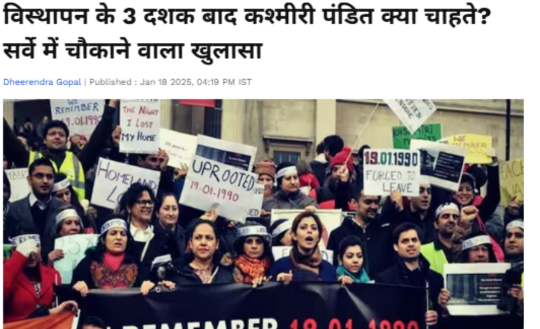
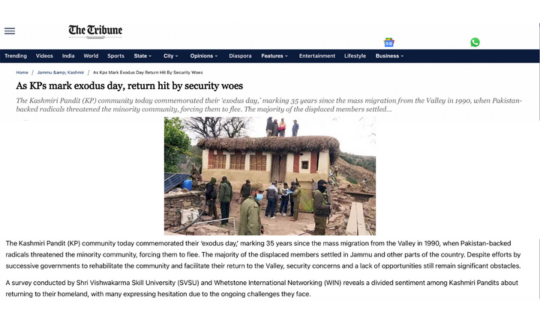
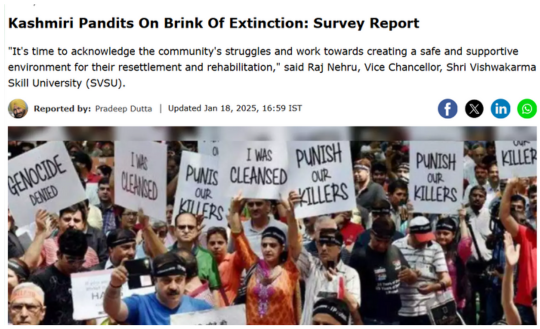
19th Jan marks the 35th year since the forced exile of the Kashmiri Pandit community. Shri Vishwakarma Skill University (SVSU) and Whetstone International Networking (WIN) have conducted empirical research and subsequently prepared a comprehensive Cultural Survey Report. This report, prepared through an extensive cultural assessment and wider consultations with the Kashmiri Pandit diaspora, seeks to shed light on the profound socio-economic, cultural and psychological impact of the forced migration on the Kashmiri Pandit community. The findings and recommendations aim to inform policy formulation and drive initiatives that support cultural preservation, socio-economic upliftment and the rightful recognition of the challenges faced by the displaced community.
Despite widespread misconceptions, 62% of respondents express hope for returning to Kashmir, with security as the primary concern. Importantly, 42.8% prioritize government-facilitated group settlements, reflecting a strong collective will for structured rehabilitation.
Contrary to narratives suggesting widespread property sales, 66.6% of respondents still own properties in Kashmir, although 74.7% report these properties are unused or dysfunctional. Only 44.1% sold their properties, largely under distress conditions in the 1990s, debunking the myth of voluntary disengagement from ancestral land.
Over 12% of respondents have purchased new property post-exile, highlighting the enduring emotional and cultural ties to Kashmir.
61.3% relocated up to three times, and 48.6% live in migrant camps, highlighting prolonged instability and the urgent need for durable settlement solutions.
High levels of underemployment and inadequate political representation persist, with 58.9% reporting political discrimination and 63% expressing concerns towards their rehabilitation efforts.
Download the complete Cultural Survey Report in PDF format.